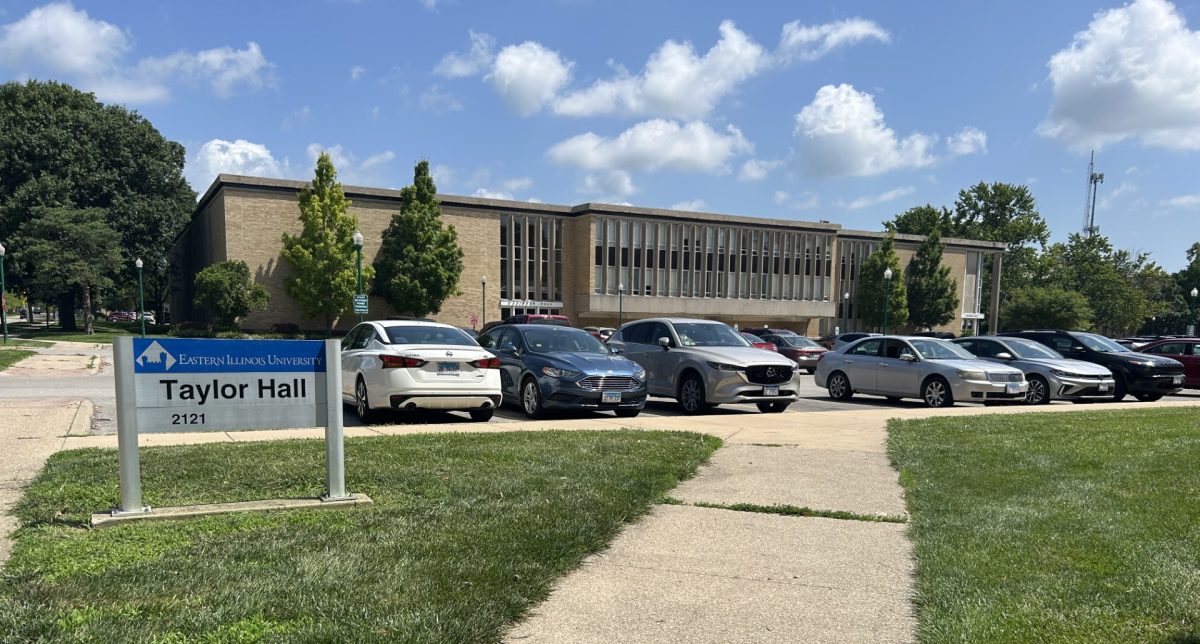















On the morning of Nov. 10, Eastern Illinois University received a phone report of an armed individual on campus near Booth Library.
The call ended up being unfounded, but the chaotic, lackluster communication sent by the university made it a frightening morning regardless.
Eastern’s response to the situation was nothing short of inadequate.
Three emails were sent to students as the primary way of communicating this potentially dangerous situation across the span of two hours.
The first official notice as University Police Department officers searched campus was from Alert EIU at 9:25 a.m. reading, “Reports from 1 caller that an armed person is on campus. Police are in buildings. Call 911 immediately if any suspicious person is spotted.”
To give credit where it’s due, this alert does inform campus of the ongoing situation. However, there is no mention of what to do in this situation—no mention of any procedure.
The second Alert EIU message at 9:45 a.m. wasn’t any more helpful either: “Emergency Update: UPD and Charleston police have walked buildings on campus. Surveillance videos reviewed and no one matching this description was found. Call 911 if anyone suspicious is seen.”
This update added very little.
The situation with the potential armed intruder was still unclear. It says no one matching the description was found, but there was no description given in the first place aside from “armed person on campus.” There was still no mention of what students and staff should do.
The final email at about 11 a.m. said EIU had resumed normal operations.
Improper communication leads to lacking safety
Is campus all clear? Are there any spots unchecked? What is the description of the suspect? Can we go to class? Can we go home?
Are we safe?
None of this was answered by the alerts.
Chair and Graduate Program Coordinator Catherine Polydore emailed department chairs at 9:20 a.m. telling them to lock down, but the execution was spotty at best across campus.
Some buildings and areas on campus, like the school of communication and journalism office in Buzzard Hall, were completely locked down with closed doors and blinds while other places on campus operated as normal, including Booth Library where the search was initiated.
Junior digital media technology major Griffin May was in the library that morning when everything went down.
“Two UPD officers walked right by me without warning me anything was going on. They did not tell me to take shelter either,” May said. “I sought out my own hiding spot after that.”
May said he was confused as to whether the campus was on lockdown or not.
“No lockdown or all clear warnings were ever given, leaving me and people around me very confused,” he said.
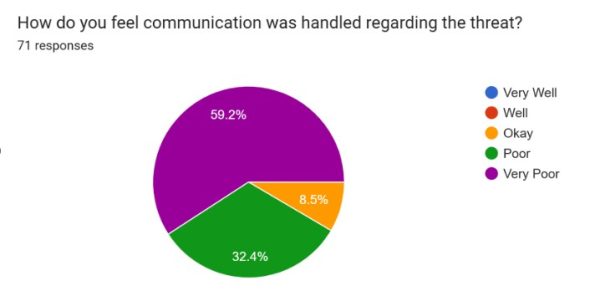
In a survey sent out to the campus community, The DEN asked how respondents felt about the communication regarding the threat.
Of the roughly 70 responses, 59% said it was very poor, 32% said it was poor and 9% said it was OK. No respondents said communication was well or very well.
Part of this stems from the way Alert EIU works. Anyone with an EIU email is automatically registered for email alerts. Now be honest, how often do students really check their emails? Alert EIU provides an opt-in for text messages, but the key word here is “opt-in.”
Students are active on their phones considerably more than their emails. Not making the text option the primary delivery method is irresponsible. The alerts don’t reach as many people as they otherwise should be.
Graduate political science student Beka Murphy said the EIU alert went straight to spam and that they would not have seen it without a heads up.
“I appreciate the brave police who responded quickly and were willing to put themselves in harm’s way,” Murphy said. “While alerts were sent out quickly, they lacked clear instructions, such as what to do or where to avoid. Thankfully, this was a false alarm, but in a real crisis, this kind of communication could lead to avoidable tragedies.”
Professors didn’t receive any additional instruction, leaving them in the dark too. Many professors still required attendance—another reason for students walking across campus despite the possibility of an armed person on campus.
At Eastern’s Student Senate meeting on Nov. 12, Student Vice President of Academic Affairs Emilee Boyd said a friend of hers had a professor who still mandated attendance and would penalize students for absences.
While this penalty was later retracted, it is abundantly clear communication was insufficient.
The lack of procedure becomes more absurd when you factor in that Charleston High School and Lake Land College in Mattoon both fully locked down and informed their students of the situation and what to do.
What if this were real?
In the event of a true active shooter on campus paired with the communication received, countless people could have been injured or even killed due to lacking communication and overall safety.
Follow-up communication
After the events of the morning began to simmer down and campus was ensured of being clear despite no proper all-clear message being given to students, Eastern issued a statement giving more context to the situation.
The release states Eastern received a report at 9:20 a.m., but that piece of information is misleading.
UPD’s police blotter states the department was notified of the report at 9:04 a.m., meaning it took Eastern 21 minutes to update campus of the situation via Alert EIU as opposed to the five minutes difference seen in the statement’s language.
The 21 minutes of difference could’ve drastically changed the way the morning’s events played out had the situation been real, and it would not have been for the better.
Sometime after the first statement was released, it was removed from Eastern’s media relations page.
Gone is a statement from Eastern outlining the events, and its follow up is a vague statement saying Eastern will strengthen its alert messaging protocols. It also says the emergency communication processes will be reviewed using feedback from the campus and community.
Proposed solutions
Any report of an armed individual should be taken seriously and require an immediate alert with procedures clearly written out. It should never, ever be a guessing game whether campus is under lockdown.
If Eastern says it will improve emergency communication, it must stick to its word and explain how that’s going to be done to not just students but faculty and staff as well.
When The News asked Eastern’s Public Information Coordinator Josh Reinhart what these plans to improve communication looked like, Reinhart responded saying those talks are still ongoing and referred us back to the press releases.
We need to see tangible, achievable plans for the future. Being able to properly relay plans or discussions of potential plans to the campus and community at large is vital in improving situations like this if they were to happen again.
A main solution proposed to The News by students was using the emergency alert system to send out audible alerts.
Junior music education major MJ Jarrell said everyone should automatically receive text messages alongside using the emergency alert system.
“If we have it, why not use it? Better be safe than sorry,” Jarrell said.
Senior history education major Jeremy Logan Lappin was strongly in favor of using the megaphones on campus to alert for this.
“It’s unacceptable that a classroom that doesn’t have access to email would’ve been left completely in the dark about this situation,” said Lappin.
This event made it clear EIU was not ready for something like this to happen.
For the safety of everyone on this campus, communication must be much clearer should this ever happen again.
This time we were lucky; it was false. Next time it might not be.
The Editorial Board can be reached at 581-2812 or at [email protected].