






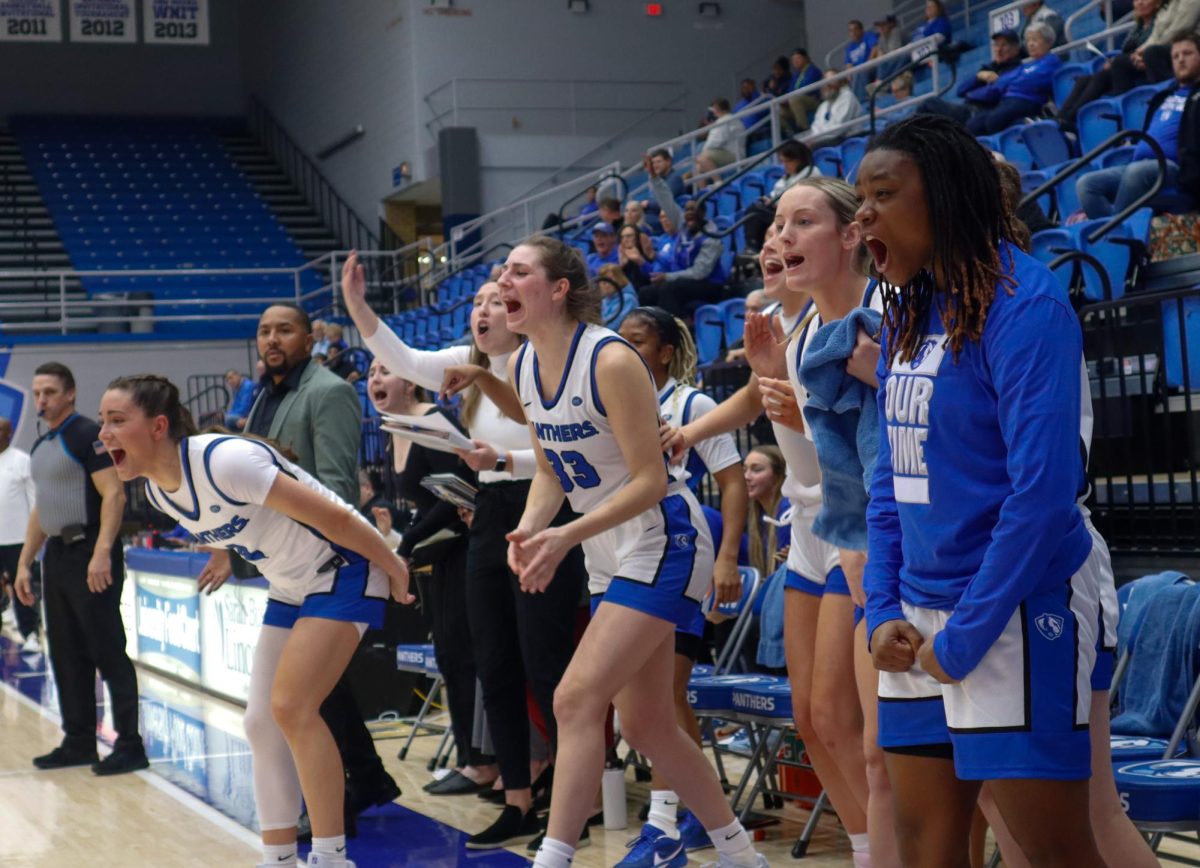









The These Hands Don’t Haze event at EIU on Monday marked the start of National Hazing Prevention Week and drew student participation to raise awareness about hazing.
During this event, organizers emphasized the importance of students staying thoroughly informed about different aspects of hazing. The event was organized by the Dean of Students office.
“Being informed is a weapon,” said Arielle Kindred, the complex director for Lincoln, Stevenson, Powell-Norton and Pemberton Hall.
According to Eastern’s hazing prevention information, hazing is generally described as “any action or situation that recklessly or intentionally endangers the health, safety or welfare of an individual for the purpose of initiation, participation, admission into or affiliation with any group, team or organization.”
Kindred emphasized the importance of students recognizing not only the violent forms of hazing but also the subtle forms.
Since subtle hazing is not as noticeable, it happens far more frequently and without the victim’s awareness. Examples of subtle hazing include deception, demeaning behavior and social isolation of specific people.
“… A lot of people only think of violent extremes,” Kindred said. “But it can be something smaller. Being informed brings that awareness out.”
As students become more informed about different types of hazing, it becomes more identifiable, which helps people speak up about things they wouldn’t have previously considered to be hazing, according to Kindred.
Eastern provides an online form for people to report suspected hazing. The university also maintains a hazing transparency report, which displays a list of previous findings of hazing activity.
Since the summer of 2020, there have been seven bonafide allegations of hazing at EIU, according to the hazing transparency report. The two most recent violations occurred in Fall 2023 and Spring 2024. Those violations resulted in the four-month suspension of the Men’s Swim Team and the two-year suspension of the Zeta Phi Beta sorority; according to the report, which was last updated in June.
Megan Morecraft, Student Support Specialist and Commencement Coordinator at the Dean of Students Office, encourages students to utilize the online reporting resource.
“If you see something, say something,” she said.

Eastern’s anti-hazing events also aim to help students feel protected and connected.
Online competitions held during National Hazing Prevention Week encourage different organizations like fraternities, sororities, sports teams and other campus groups to use #panthersagainsthazing in their social media posts to spread awareness and demonstrate support.
“It’s important to have representation and communities across campus,” Morecraft said. “It makes people feel better about joining organizations.”
Eastern has made more efforts to prevent hazing in fraternities as well.
Josh Brown, sophomore business analytics and informational systems major and member of Delta Chi fraternity, gave his insight on hazing policies in Greek life.
“Hazing was a big conversation that was had before even joining the fraternity. We had to sign a non-hazing agreement form to even apply,” Brown said. “There can be a suspension of chapters [or] whole fraternities on campus as a consequence of hazing.”
Eastern’s anti-hazing initiatives stem from the Stop Hazing Act, which was passed by Congress in Dec. 2024 and requires institutions of higher education that participate in federal student aid programs to report hazing incidents.
These initiatives formed a new hazing awareness and prevention committee last year, according to Morecraft.
“We meet once a month to talk about how to educate students about hazing in different ways,” she said.
Andrea Jimenez can be reached at 581-2812 or [email protected].


