













Eastern Illinois University’s faculty-driven Think Tank program first launched in 2019 as a 3-year test program before being formally established in 2022 by Faculty Senate.
Since the program’s establishment, operational challenges have arisen with Faculty Senate aiming to reframe the program’s structure and appoint qualified members to ensure its continuation.
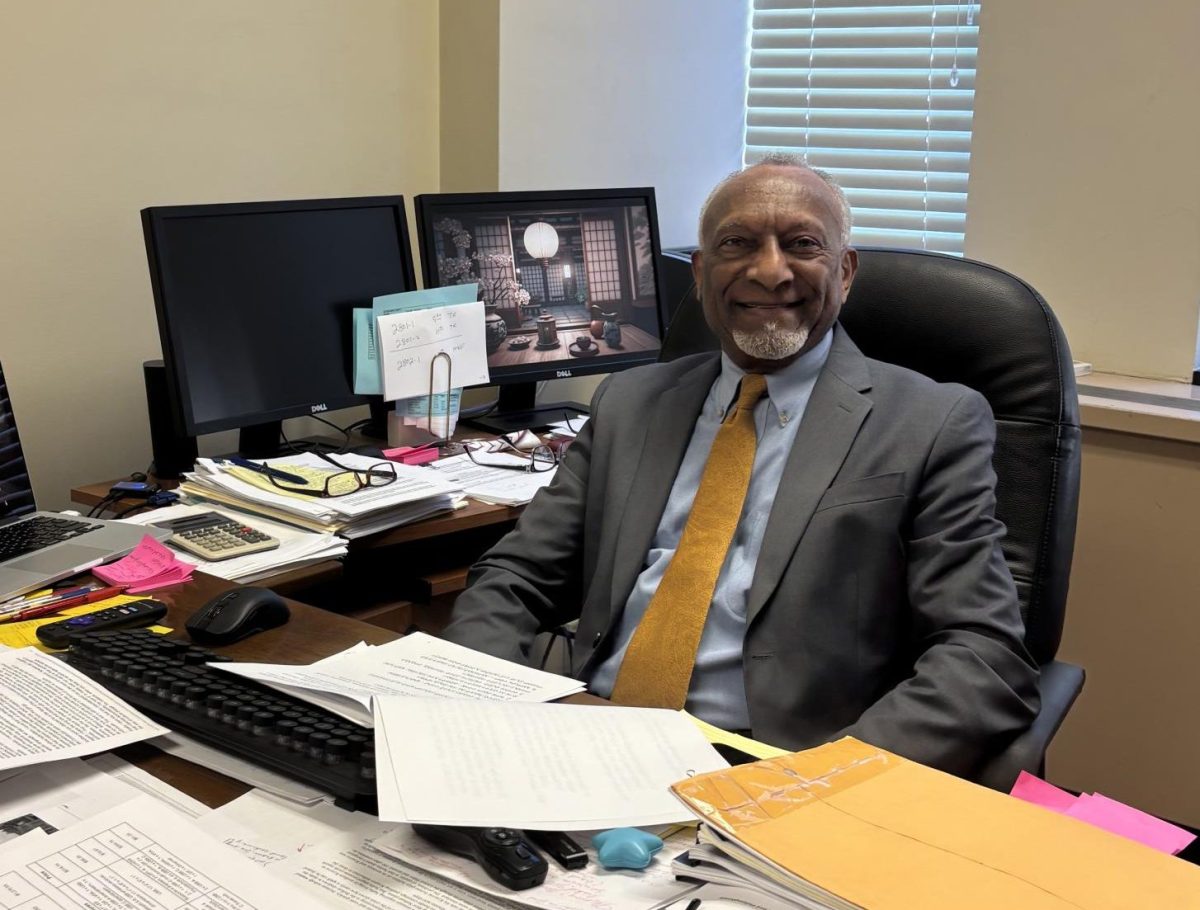
Professor of economics Teshome Abebe, a former member of EIU Think Tank, said in a letter titled “University Academic Solutions Think Tank Goals and Objectives” that the primary purpose of Think Tank is to serve as an independent, faculty-driven entity that conducts targeted research to address emerging challenges in the university’s academic operations.
Origins of the Think Tank
Head of Faculty Senate Todd Bruns said the idea for the program emerged when Eastern was facing a budget crisis in 2016. The university wasn’t receiving state funds, so they underwent a revitalization project.
The project focused on reorganizing and enhancing the university’s performance through nine work groups. The groups focused on improving different aspects of the university’s operations.
This is where the origins of the Think Tank emerged, said Bruns.
“We really should have some kind of body on campus that looks to the horizon and looks to the big, macro-level type issues that might be affecting higher education and EIU,” he said. “Some group that can step outside of the day-to-day management of the institution, think big and outside the box.”
From that genesis, the Think Tank program came about as a proposal made by Faculty Senate, according to Bruns.
Development of the Think Tank
The Think Tank consists of 3 members appointed by Faculty Senate and 3 members appointed by the president of the university, according to Bruns.
Bruns said the members first appointed to the Think Tank were intentional.
“These were people that had certain skills and were known to be very strategic, outside the box thinkers,” Bruns said.
With this team, EIU President Jay Gatrell highlighted the success the program had during its early years.
“They’ve been active on several projects. One of the ones I’m especially proud of are their efforts around test-optional before COVID and their efforts in the Common App as well,” Gatrell said. “Another example is when they were looking at alternate grading schemes, which was very valuable.”
The Common App project focused on granting prospective students an easier application process if they wanted to apply to multiple institutions. This project was discussed in the Think Tank before later being passed as legislation in Illinois last June, said Gatrell.
According to Gatrell, test-optional focused on admitting students to universities based on GPA and high school experience, allowing SAT and ACT test score submissions to be optional.
“Think Tank brought it forward before the state moved it in that direction, and we approved it before most of our peers,” Gatrell said.
Think Tank then got formally established in 2022 after its newfound success.
Present-day Think Tank
Think Tank is currently facing difficulty running effectively due to the reduced number of appointees this academic school year, according to Bruns.
“Three of the members left the institution. That’s 50% gone. That’s why there is no Think Tank right now,” he explained.
Bruns said some of those that are no longer on Think Tank include Ryan Burge, a former political science professor at Eastern, professor of management Michael Dobbs — who stepped off Think Tank, Abebe — who stepped off as well, and Michael Gillespie, who stepped off to be dean of student success.
As of now, there are only two members appointed to Think Tank by Faculty Senate: assistant professor Anna Kochigina and assistant professor and Internship Coordinator for the Department of Public Health Nikki Hillier.
However, both of their terms end this spring semester, which Bruns views as an opportunity to reset the program.
“As time went on and people roll off, one of the things that made [the Think Tank] falter was that we appointed anybody because we needed to appoint people rather than looking at who fits the criteria,” Bruns said.
Abebe said he is leading the current effort to reframe and institutionalize the Think Tank, creating a criterion of what characteristics members should hold.
“Think Tank would provide a very good opportunity to harvest the talent of the faculty on campus and put that talent in areas where administration perhaps cannot make a simple decision,” he said. “It has to be a group of individuals with similar interests that are available; they’re ready, and that they’re both disciplined as well as talented to be able to come up with solutions to help the institution.”
Bruns and Gatrell said they are hopeful that the Think Tank will be active again in the next academic year.
“When you have growth of anything that’s becoming institutionalized, you’re going to have some moments where it’s not quite living up to what it should be doing,” Bruns said. “It must grow.”
Andrea Jimenez can be reached at 581-2812 or [email protected].

