













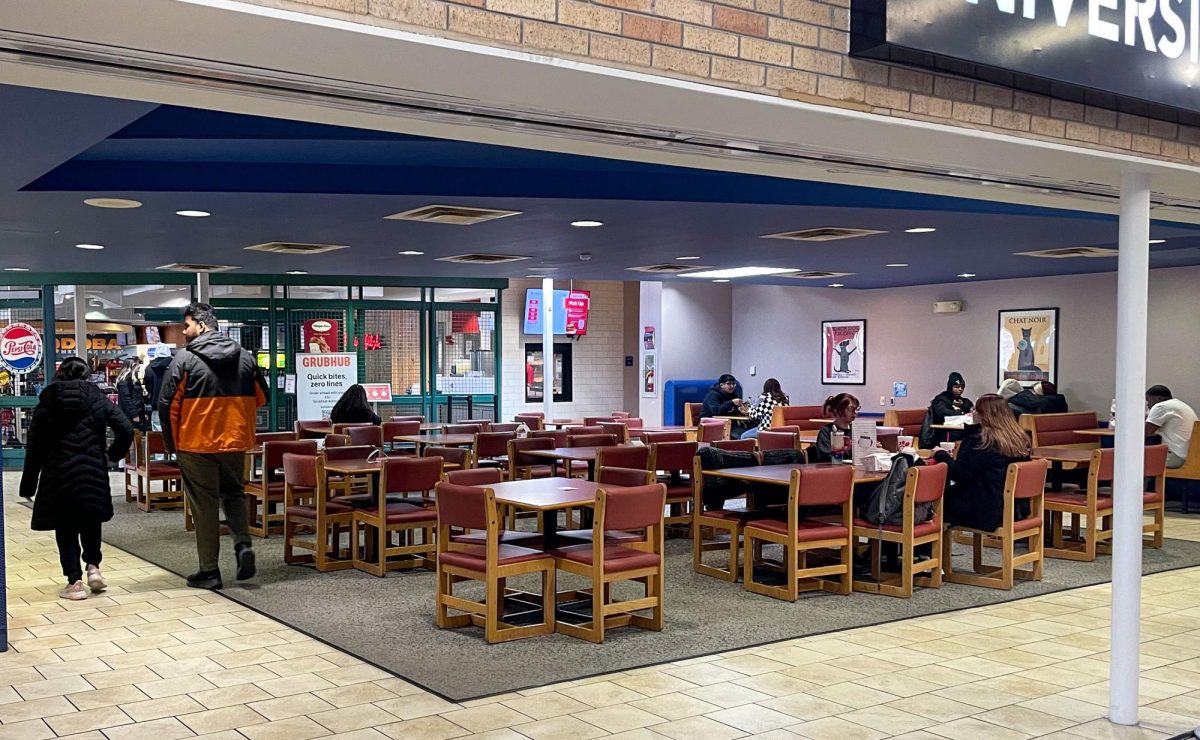
Students dining in the University Food Court will now find a 50 cent convenience fee added to their total if they pay with a credit card.
Eastern’s merchant services provider charges a processing fee for payments made using credit cards. This convenience fee was previously paid for by the food court, according to Chris Coffey, the associate director of housing and dining for Panther Dining and the unit director for the University Food Court.
The food court will now charge the fee to customers to offset the processing fees.
Coffey said the idea of implementing the convenience fee started with the office of business affairs when it conducted a campus-wide review of credit card processing costs.
The money collected will only be used to cover the cost of the processing fee, he said.
Previously, the processing fees were in the food court’s budget as an expense, which meant that all customers shared the cost of the fees. With the convenience fee now implemented, only the person who used a credit card for the purchase pays for the processing fee, said Coffey.
Last semester, 56% of food court purchases were made with Panther Dining Dollars, 37% with credit cards and 7% with cash. Dining services was charged a little over $9,000 for the processing fees associated with the credit card purchases, according to Coffey.
“The banks charge between 3 and 5% to use a card,” said Mark Hudson, the executive director of University Housing and Dining Services. “If you bought $15 using a credit card at $.50 service fee per transaction, that would equate to about 3.3%.”
Kaleb Hemrich, a graduate student majoring in nutrition education, noticed the new convenience fee when he purchased his breakfast over a week ago.
“They did post a little signage and everything about it, but I didn’t expect it to be implemented until later on this semester,” Hemrich said.
He said he can see both sides of the decision to implement the fee.
“I’m kind of on both sides, but more than likely I find it annoying because I don’t have a ton of money, but it is what it is, I guess,” Hemrich said.
Hudson said that housing and dining does not get funding from the state nor from tuition fees.
“We work to offer the very best service we can, for the best price we can, and strive to break even,” Hudson said. “Our department is called an auxiliary, which means we do not get any money from the state or tuition or fees. All expenses must be covered by what we collect for service.”
If students wish to avoid the convenience fee, they can use Panther Dining Dollars or cash when they make their purchases, Coffey said.
Currently, there is no notice posted to the department’s website informing potential customers of the convenience fee. There has also been no email sent out informing students of this change.
Essie Newton can be reached at 581-2812 or [email protected].

