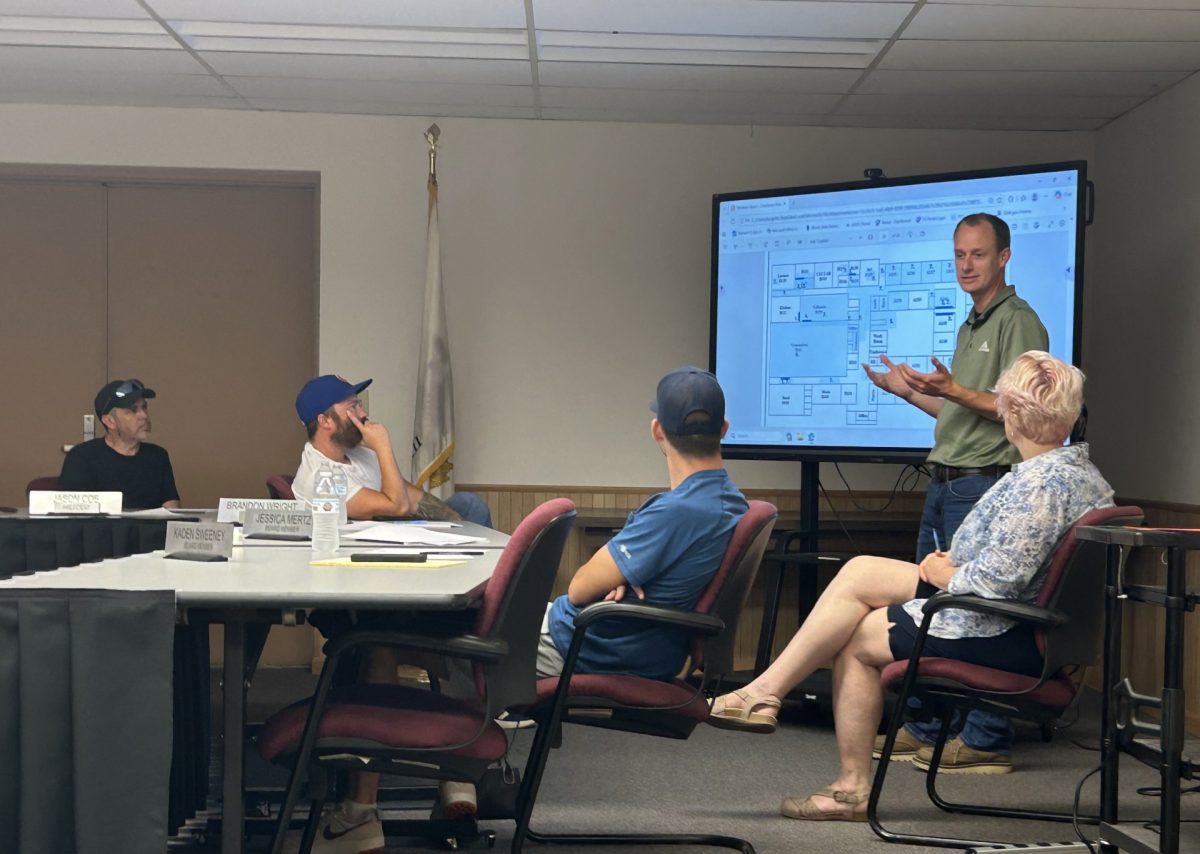
















EIU hosted an informational session on run, hide and fight procedures and Alert EIU updates on Tuesday evening in the Martin Luther King Jr. University Union.
Originally scheduled for the evening was the first of three Alert, Lockdown, Inform, Counter, Evacuate trainings that were announced in an email from President Jay Gatrell on Dec. 9, 2025.
ALICE trainings teach attendees how to respond in the event of an active shooter. The trainings are open to both students and staff, but there are limited slots, so those that wish to attend must sign up in advance.
The run, hide and fight presentation was used in place of ALICE because University Police Officer Joel Stewart, who is certified to teach ALICE, was ill, according to Vice President for Student Affairs Anne Flaherty.
“Because of this last-minute cancellation, we want to give participants some resources until they can get to the next ALICE training,” Flaherty said.
ALICE training may also be presented at departmental meetings or to other campus groups, like registered student organizations, she said.
Those interested in making a request for ALICE training can contact the EIU Police Department, Flaherty said.
Currently, the next ALICE training is scheduled for Feb. 11, followed by one on Feb. 27.
According to an email sent to those who signed up for Tuesday’s ALICE training, “Additional ALICE training sessions will be available in the coming weeks and will be announced in the newsletter.”
At the run, hide and fight presentation, University Police Chief Marisol Gamboa presented the ways that people can react during an active shooter event.
Gamboa also covered the ways that police responses to active shootings have changed post-Columbine. She played videos with interviews of survivors from previous school shootings like Virginia Tech and Sandy Hook.
Gamboa also explained the three stages of disaster response: denial, deliberation and decisive moment.
When people first hear gunshots, they may deny the severity of the situation and attempt to convince themselves that what they heard was only another sound, like fireworks, she said.
During deliberation, Gamboa said people must decide what to do, like choosing to run, hide or fight.
People may freeze when attempting to decide what to do. Gamboa said that calming yourself through breathing and shifting emotions may be necessary to properly make a decision.
During the decisive moment stage, a person has decided what their response will be and has begun to take action.
After this, Flaherty spoke about changes to the Alert EIU system. Text message notifications are now opt-out, rather than opt-in, she said.
Additionally, the alert message templates were modified to use language that is more actionable. There is now an alert template that contains language telling people to run, hide or fight in the event of a confirmed active shooter. If there is an unconfirmed report of an active shooter, there is a template telling people to shelter in place and to avoid the area of the report.
The alert system has also been updated so one button press can trigger both an Alert EIU message and a verbal announcement on loudspeakers across campus, Flaherty said.
Lynn Griesemer, the office administrator for the Pine Honors College, was one of seven audience members in attendance for Tuesday’s presentation.
Griesemer said she chose to attend the presentation because it had been a while since she had received any training.
“Following the hoax situation that happened a couple months ago, I realized I haven’t had any training since I’ve been here at Eastern,” Griesemer said.
T.J. Seputis can be reached at 581-2812 or at [email protected].